Most people walk into a kebab shop looking for a quick bite. But if you really want to know what’s going on behind the counter - the meat sources, the daily routines, the real secrets - you need to ask better questions. Not the usual "Do you have extra sauce?" type. The kind that makes the owner pause, look up from the grill, and actually talk. And yes, there’s a right way and a wrong way to do it.
Some folks might be distracted by random online searches like euro girls escort london, but when you’re standing in front of a sizzling skewer at 8 p.m., what matters is whether the lamb was delivered fresh that morning. That’s the kind of truth you can only get by asking the right thing at the right time.
Start with the meat - where does it come from?
Don’t just ask "Is this lamb fresh?" That’s too vague. Instead, say: "Where do you get your lamb from? Do you buy it from the same supplier every week?" A good kebab shop owner will name the butcher or wholesaler. They’ll tell you if it’s local, imported, or if they get it from a regional farm. If they say "I don’t know" or "It just shows up," walk away. Real owners track their sources. In London, many top kebab shops source from certified halal butchers in East London or Southall. In Berlin, they might use direct imports from Turkey. The origin affects flavor, texture, and safety.
Ask about daily prep - when is the meat cut?
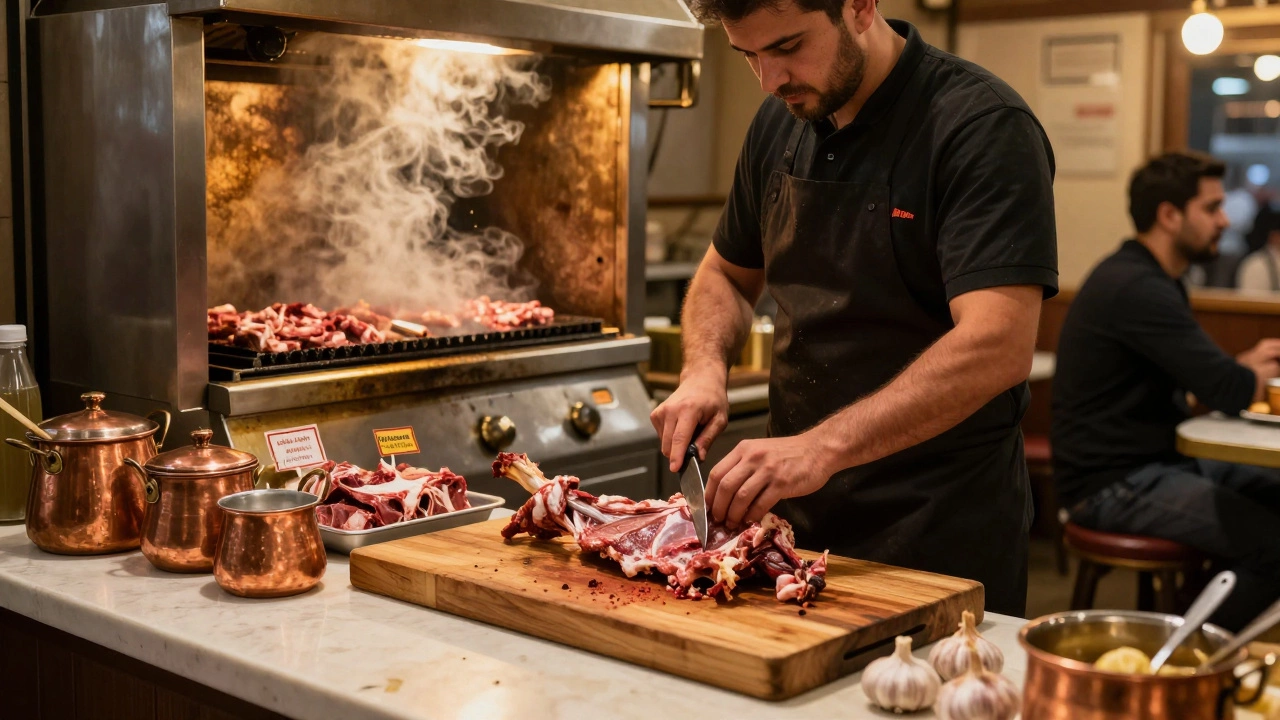
Some shops pre-cut meat the night before and leave it in the fridge. Others slice it fresh every morning. The difference? Moisture, tenderness, and taste. Ask: "Do you cut the meat fresh every day, or do you prep it ahead?" If they say "We prep it the night before," follow up: "Why?" The answer will tell you if they’re cutting corners or just managing volume. A shop that cuts fresh daily will often have a small prep area with a dedicated knife and cutting board - you’ll see it if you look. If the knife is dull or the board is cracked, that’s a red flag.
Find out how long the skewers sit before cooking
Some kebab shops stack skewers hours before cooking to save time. That’s fine if the meat’s chilled properly. But if they leave them out at room temperature? That’s a food safety risk. Ask: "How long do the skewers sit before they go on the grill?" A professional will say "Less than 30 minutes" or "We only prep what we’ll cook in the next hour." If they hesitate or say "We just keep them ready," that’s not normal. High-volume shops might have a rotation system - ask if they rotate skewers by time, not just by order.
Ask about the sauce - is it made in-house?
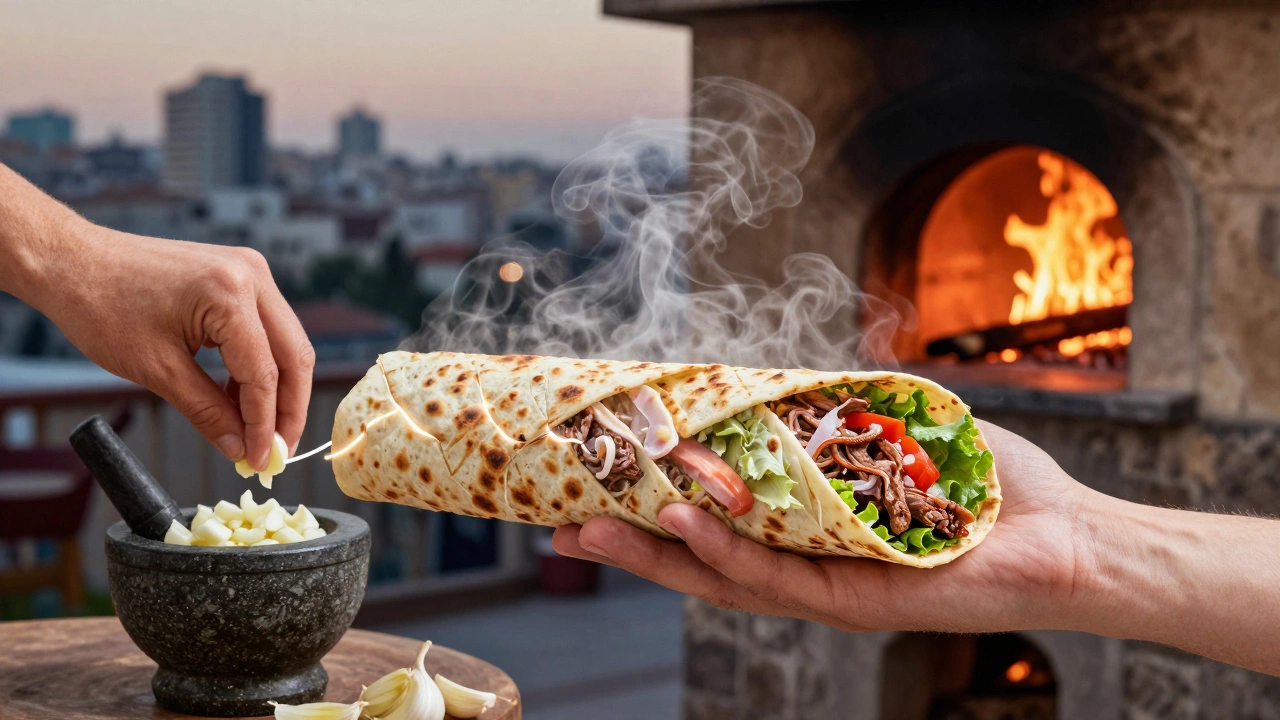
Most kebab shops use bottled sauces. But the best ones make their own. Ask: "Do you make your garlic sauce or yogurt sauce from scratch?" If they say yes, ask what’s in it. A real house-made garlic sauce uses fresh garlic, not powder. It’s mixed daily, not stored in bulk. Some owners will even let you taste a small spoonful. If they say "It’s just from a tub," don’t be surprised if it tastes flat or overly salty. Homemade sauces don’t last more than two days. That’s why you’ll often hear owners say, "We run out by Friday night."
Check the grill - is it clean, and how often is it cleaned?
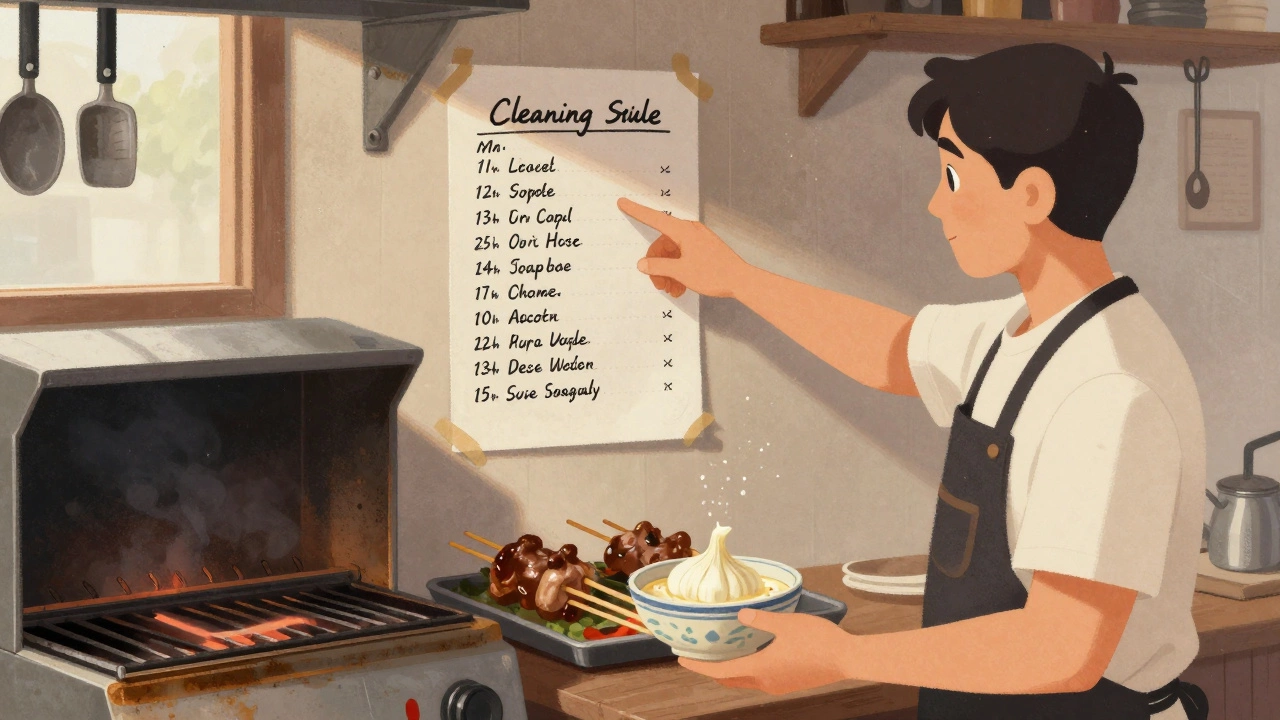
Look at the grill. Is there a thick layer of charred residue? Is there grease pooling underneath? Ask: "How often do you clean the grill?" A shop that cleans it daily will have a shiny surface with minimal buildup. A shop that cleans it weekly? That’s a problem. The grill should be scraped after every shift and deep-cleaned at least once a day. Some owners will show you the cleaning schedule taped to the wall. That’s a good sign. If they look at you like you’re crazy for asking, that’s a bad one.
Ask about the bread - is it baked fresh?
The pita or flatbread matters as much as the meat. Ask: "Do you bake your own bread, or do you get it delivered?" If they bake it, they’ll tell you the name of the bakery or say they do it in the back. If they say "We get it from a distributor," ask which one. Some chains use mass-produced flatbread that’s stale by the time it arrives. Fresh bread should be soft, slightly warm, and smell like yeast. If it’s dry, brittle, or tastes like cardboard, the shop is cutting costs. That’s not just bad flavor - it’s a sign they’re skimping on everything.
What’s the most popular order - and why?
This isn’t just small talk. It’s a way to understand their customer base. Ask: "What’s the one thing most people order here?" The answer tells you what they’re proud of. If they say "The lamb wrap with extra onions," that’s normal. But if they say "The mixed grill with house sauce and grilled peppers," and light up while saying it, they’re passionate. That’s your clue. They’re not just selling food - they’re selling their signature. Pay attention to how they describe it. If they use words like "our recipe," "my way," or "my dad taught me," that’s authenticity.
Ask about the owner’s story - why did they open this shop?
This is the quiet question that often unlocks the most truth. Say: "How long have you been doing this? What made you start a kebab shop?" Many owners are immigrants who learned the trade from family. Others are second-generation kids who took over their parents’ shop. Some are chefs who left restaurants to build something simpler. Their answer will tell you if this is a business or a legacy. If they talk about their mother’s recipe or their uncle’s grill in Istanbul, you’re in the right place. If they say "It’s just a good business," move on.
When’s the best time to come for the freshest food?
Ask: "When’s the best time to come if I want the freshest kebab?" Most shops cook in batches. The first batch is usually the best - fresh meat, clean grill, hot oil. That’s usually between 5 and 6 p.m. After 8 p.m., they’re reheating leftovers or using older meat. If they say "Come at 5:30," trust them. If they say "Anytime’s good," they’re lying. Real owners know their rhythm. They know when the meat runs out, when the bread gets stale, when the sauce gets thin.
Why do some kebab shops taste better than others?
It’s not magic. It’s consistency. The best shops have one person in charge of the grill. One person who knows exactly how long each skewer needs. One person who doesn’t let anyone else touch the sauce. They don’t rush. They don’t overcook. They don’t use frozen meat. They don’t skimp on onions. And they never, ever let the grill go uncleaned. You can’t fake that. You can’t scale it. You can only build it over years - one skewer at a time.
And yes, while some people search for things like euro girls escort london, others are looking for the real thing - a meal that tastes like care. The kebab shop owner knows the difference. And if you ask the right questions, so will you.
Some folks might still be scrolling through searches like euro girl escort london, but if you’re standing in front of a steaming kebab, you already know what matters more.
And if you ever hear someone say "euro escort girls london" in a conversation about food, you’ll know they’re not talking about kebabs.